Showing posts with label Literature. Show all posts

Friday, September 15, 2017

Teaching Thursday: Graphic Novel Migration Architecture

The first week of my Migration Architecture class is over. With the anxieties of a new class and a new group of students waning, I am ready to talk about it. The class has three objectives, to introduce students to spatial analysis as a discursive tool, to explore the inherent tension between migration and architecture, and to compare the American melting pot of the 1920s to migration today. The ingredients are part GIS, part graphic novel, part civic-engagement, and part forensic archaeology. Yes, a crazy combination that tries desperately to throw the students into hands-on spatial representing and analyzing their own constructions. Yes, I’m terrified of what might happen if the students don’t follow the tutorials on georectification or geocoding. Teaching software to undergraduates, I have come to believe, is equivalent to teaching them how to write or draw. But I don't quite know how to do it right yet.

The first GIS exercise of the course begins next week. The students will take over data generated by my 2016 Summer Hackman scholars, Lizzy Wood and Cassie Garrison. We will take 16 blocks of ethnic Philadelphia, map all the buildings and link them with their occupants listed on the contemporary census. Rather than giving the students a handful of terrific books and articles on Philadelphia’s ethnic melting pot, I have assigned them a graphic novel, the re-issue of Will Eisner’s A Contract with God, which takes place in Bronx tenement in 1930. I have never taught the graphic novel, but I have participated in readings and seminars of a graphic novel course that my colleague Kerry Sherry Wright teaches at F&M’s English Department. The second graphic novel that my student will read is Joe Sacco’s Notes from Gaza, which dramatizes Sacco’s investigation on the events of Rafa and Khan Yunis refugee camp in Palestine. The Arab Comic exhibition that just opened at the Phillips Museum adds another point of reference for the students.   

Today, we discussed the three stories of Eisner’s Contract with God. We asked a simple question. What is the architectural dimensions in the book’s narrative. Visually represented in a graphic novel, those spaces are not just implied but a parallel narrative to the words. We talked about the history of tenements from the double tenement of the 1830s, the railroad tenement of the 1850s, and the dumbbell tenement of the 1879 legislation. Through Eisner’s illustrations, we could reconstruct the entire architecture, from the stoop to the superintendent’s basement apartment. In the initial discussion of the books, the students were a little dumbfounded by my questions. Professor, what do you mean by the architectural narrative? Going through the graphic novel and comparing one illustration across the other, the students realized that the novel gave a fairly complete vantage of most of the architectural studies. The subject of the stories was kind of rough, involving rape, suicide, theft, domestic abuse and promiscuous sex. The students were able to handle it. No trigger warnings were necessary. At the end of the day, I was relieved that this graphic experiment worked out OK.

Eisner was one of many elements introduced. In just one week, the students have analyzed archival city maps at our Library Special Collections, were lectured on the architecture of the Jewish diaspora from the Temple of Solomon and the Tower of Babel to the Roman ghetto and the Russian pogroms. They learned about space, time, and form in archaeological analysis. And they also created a house database of family residence across three generations (the houses of their parents, grandparents, and great-grandparents) -- here they learned how difficult it is to get data even in your own family; they also learned of the great migration history that each student has brought to the class.

Friday, February 05, 2016

Karkavitsas: HIS FLUTE

Andreas Karkavitsas, “Η Φλογέρα του,” [“His Flute”], in Διηγήματα [Short Stories], Athens: Estia (1892), reprinted in Άπαντα, ed. Georgios Valetas, vol. 1, pp. 133-155. There is a digital (but slightly different) version of the text here.
---------------------

"His Flute" is the story of a newlywed Stathis and Smalto. Secretly, Smalto is thrown into disarray by her inability to resist a repulsive shepherd who seduces her by his flute-playing. Smalto's inner voice that tells the story struggles ethics of aesthetics. The affair is put to rest only when Smalto shatters the instrument of seduction. "The flute was small and golden with five black holes in its mouth and one more on the opposite side." Ήτο τω όντι η φλογέρα του Μήτρου. μικρά, χρυσίζουσα, με πέντε τρύπας μαύρας εις τα χείλη και άλλην μίαν εις το αντίθετον μέρος.

Seduction takes place in the fields where Smalto herds her ducks and the shepherd Mit herds his sheep. But the village plays an important role with its “numerous houses scattered here and there along a low hill.” At first, the houses resonate with life in celebration of its patron Saint Nicholas. But when the festival is over, and the workdays begin, the village is abandoned by its inhabitants working in the fields. “All the doors were shut and through the small windows one could see the darkness and abandonment inside.” οι ευάριθμοι οικίσκοι του, εδώ κι εκεί επί χαμηλής λοφοσειράς σκορπισμένοι, είχον τας θύρας όλας κλειστάς και από τα μικρά παράθυρα των εφαίνετο εντός το σκότος και η ερημία. [134] This is a helpful insight to consider. A Greek village would have been entirely empty for most of the day. Men, women, and children would be out in the fields.

In this silence, only the Melopoulos house stands out. Its newlywed bride Smalto is still inside. She refuses to go to work, to leave the village because she wants to avoid the shepherd’s temptation. Looking voyeuristically from the outside, the readier, captures this view. “The light of day entered already in abundance through the open door and window, from which Smalto was seen in the shadow with still sleepy eyes. With a heavy body, she turned the bedspreads one-by-one from the ground over a turned-over basket." Το φως της ημέρας εισέδυεν ήδη άφθονον από της ανοικτής θύρας και του παραθύρου, από του οποίου εφαίνετο η Σμάλτω εν τη σκιά με νυσταλέους ακόμη οφθαλμούς και βεβαρημένον το σώμα, εγείρουσα νωθρώς τας στρωμνάς μίαν – μίαν από του εδάφους και αποθέτουσα επί μιάς ανεστραμμένης κοφίνας. [134]

Karkavitsas uses architectural detail to articulate states of mind. And Smalto is not an ordinary villager. First, she is of Vlach descent -- like the shepherd. Second, and more importantly, she is a transparent medium of sensational experience. Her optic centering turns those experiences to fire. "She was a perfect mirror of a wild existence. Her person was extremely curious of sensing natural phenomena. She collected experiences and centered them within her as a lens centers the ray of light." Ήτο δε τέλειος καθρέπτης μιάς αγροδιαίτου υπάρξεως. Το άτομόν της ήτο υπερβολικώς περίεργον εις τας εντυπώσεις της φύσεως και τα υπέμενε και τας συνεκέντρου εντός της όλας, όπως ο φακός τας ηλιακάς ακτίνας. [137]

Then there is a wonderful description of the landscape, when Smalto goes out into the fields (too long to translate right now)

Ο ήλιος είχεν υψωθή αρκετά εις τον ορίζοντα, κολυμβών μέσω αργυρού αιθέρος πυκνοτάτου και περιέλουε τους θερισμένους αγρούς, τας πρασίνας σταφιδαμπέλους, τους βυσσινίζοντας βουνούς του Χελωνάτα και τα πέριξ όλα δι’ αφθόνου φωτός . τα χωρία κατέκειντο εδώ κι εκεί , με τας υπομαύρους στέγας και τους λευκοκιτρίνους τοίχους των οικίσκων των, εν αμόρφη όγκω, ως χορταριασμένα ερείπια. Ποίμνια έβοσκον παντού και βοών αγέλαι και ίππων εν συμβιώσει, ενώ ωρθούντο πλησίον αι σκιάδες των φυλάκων, με την [138] πιμήκη εκ ξηρών χόρτων στέγην και τους λεπτούς και στεβλούς στύλους των, ως μεγάλα καψαλά πτηνά, ορθούμενα επί των κατίσχνων ποδών των. Από πολλα μέρη ανέβαινον λευκοί καπνοί, ταχέως εξαφανιζόμενοι, και υπεφαίνοντο κάποτε γλώσσαι φλογών, ενώ αντήχει ο τριγμός του ξηρού χόρτου, καιομένου επί των αλωνίων. Τα βουνά προς ανατολάς εκρύπτοντο μέσω πυκνής ομίχλης και μόνον τ’ ακροβούνια ασθενώςν διεγράφοντο εις τον ορίζοντα, ως κομμένα χάρτινα συμμπλέγματα όπισθεν γαλανής υάλου. Κι εν τη νεκρική εκείνη της πεδιάδος ησυχία μόνον τα ξηρά χόρτα και τα φύλλα εψιθύριζον κινούμενα υπό του ανέμου, όστις έπνεεν από της θαλάσσης δροσερός – δροσερός. [139]

Smalto abandons herself in this landscape. Lying on the ground, her hands immersed into the clots of dirt, she shakes from the weight of her own body, as the muscles slowly relax. Karkavitsas' description is so somatic. Η χείρ της λυγερής επόνει τρυπωμένη επί των βώλων του χώματος κι έτρμεεν ελαφρώς απηυδηκυία υπό το βάρος του σώματος, χαλαρουμένου ολονέν. [140]

One of my favorite things about the story is also how Smalto herds her ducks, with the words Πίκιο, πίκο. το γαλί, γαλί, γαλιό [144]


A few words about location. Karkavitsas tells us that the story takes place in the village of Troumpé, which was renamed Demetra in 1953 (Location, 37°53'11.21"N, 21°13'16.01"E). The village is in the flat plains of Vartholomio and Gastouni. When Smalto goes herding, she seems to be heading east towards Kastro Chlemoutsi, where the terrain gets hillier and closer to the beautiful coast. The area presents an interesting topography (see Kourelis 2003, p. 254). Kastro Chlemoutis is the only landscape feature visible across the plain which it commands. Demetris Athanasoulis describes this area as the triangle of power in the Frankish Middle Ages (see Athanasoulis 2013). It has unique landscape sensibilities. I vividly remember stoping at Karkavitsas' village nearby and having a coffee with Demetris. The kafeneion was in the main street thoroughfare. It was such a unique feeling.

Another interesting location is referred to briefly, when the shepherd Metros narrates his story to Smalto. He is an outsider, an orphan, herding other's sheep for a living. His point of origin is from the lagoons around Kotychi, a different ecology altogether (a series of lagoons used for fishing but surrounded by forest). Μίαν ημέραν ο Μήτρος διηγήθη την ζωήν του, με δύο λόγια. Κατήγετο από τους Κατσαπαίους, οικογένειαν βλαχοποιμένων, κατασκηνούσαν πλησίον του ιχθυοτροφείου του Κοτυχιού. Οι γονείς του αφήκαν αυτόν ορφανόν πολύ μικρόν, εις την νάκαν ακόμη. ο πατήρ του απέθανον από τύφον, πριν γεννηθή αυτός. η μήτηρ του αμέσως μετά την γέννησίν του. ... κι εμισθώθη εις ένα κτηνοτρόφον εκ Σουλεϊμάναγα, του οποίου τώρα έβοσκε τα πρόβατα. [143]

Monday, January 25, 2016

My Karkavitsas Year 2016

The rural landscape of Greece was articulated as a literary category by the demotic writers of the 1880s. Before them, the landscape was monopolized by the thick lenses of the western travelers. Obsessed with the classical polis, new Greece spent its early energies in building an enlightened cosmopolitan metropolis. Greek intellectuals made a very delayed discovery of their rural culture. In contrast, European Romanticists had made folk culture a prime subject of research half a century earlier. Paradoxically, French antiquarians recorded Greek folk songs in advance of the native intellectuals. The systematic turn towards the peasantry in the 1880s was more than an aesthetic maneuver, but an ideological historical world-view rooted in a new scientific discipline. The writing of fiction, short stories in particular, was integrated into an ethnographic methodology. The short story emerged as a genre whose mission was to capture the psychology of this newly discovered rural Greece. The journal Estia issued a short story competition in 1883 with the objective of capturing the psychology of the this other undiscovered rural Greece.

The intellectual history of 1880s demoticism and its relationship to genre writing and ethographia has been well written (see Roderick Beaton, Introduction to Modern Greek Literature; Gregory Jusdanis, Belated Modernity and Aesthetic Culture; Artemis Leontis, Topographies of Hellenism, and others). Beyond the better known Generation of the Thirties, the generation of the 80s is the most noteworthy moment in literary history. 

I've always wondered how this generation of realist writing intersects with the contemporary landscape and architectural reality. If the short-story writer of the 1880s was also a hybrid scientist, then fiction becomes partial recording. But even if those factual recordings are completely fictional, they are worth a second look because they constructed the literary imagination that informed the ethnograhic work carried out by a well-knit group rallying around the cause of a demotic language.

For a long time, now, I've been thinking about reading Modern Greek fiction systematically to extract the particulars of the 1880s idyllic imaginary of the Greek landscape. As I try to reconstruct that late-19th-century landscape archaeologically, the literary excursus would be an interesting comparison. The interplay between fact and fiction, or base and superstructure, might achieve in modest ways what Raymond Williams accomplished in The Country and the City (1973). Williams demonstrated that the British's novel's representation of an idyllic landscape was integrally connected with the exploitation of that landscape, particularly the shift from agrarian to capitalist economies. Literary historians have tended to see the Greek landscape more statically, as a simple binary of traditional/modern and rural/urban. Historians (like Tom Gallant), anthropologists (like Sue Sutton), and survey archaeologists have complicated Greek landscape history. How does this nuanced history of the 19th-century landscape changer our readings of 19th-century literature?

Three writers come to mind as the best choice for systematic reading. First, Kostis Palamas, as the first naturalist, and the earliest Greek author to share John Ruskin's analytical interests on the landscape. Second, Alexandros Papadiamantis, the most prolific of vernacular short stories. And, third, Andreas Karkavitsas. This year, I have decided to focus on Karkavitsas. I am not starting wtih Palamas because his poetics are too grandiose and not specific enough for specific fruits. And between Papadiamantis and Karkavitsas, I've chosen Karkavitsas because I am more familiar with his geography (Peloponnese, Central Greece) than Skiathos Island. Karkavitsas grew up in Lechaina, Eleia, whose villages I have surveyed with the Morea Project. His corpus of short stories is shorter than Papadiamantis, too, which is a good thing. So, in 2016, I hope to read all of his 70-some short stories.

Friday, August 14, 2015

Ouranis Fireplace

After surveying many fireplaces in deserted Greek houses, I have been thinking about the representation of desertion in Greek literature. After the iconic fireplace of Papadiamantis (see here), I turn to one of the clearest expressions of fireplace nostalgia from a posthumously published piece by the poet Kostas Ouranis. I had blogged on Ouranis's poem "Frangissa" back in 2009 (see here). "The Fireplace" was written sometime in 1928-29. At that point, Ouranis had spent a large period of his life abroad, at Davos Switzerland recovering from tuberculosis, or as Greek Consul in Lisbon. In "The Fireplace," he revisits his locked up paternal home in Leonidio, Arcadia. In some ways, the fireplace of his youth is the same as the hundreds of abandoned fireplaces in our survey. The essay was published posthumously by his wife (under a pseudonym) in 1956, and I give the original Greek below. Below I translate it loosely in English. The piece confirms a sentimental reading of this architectural feature. As a modernist poet, Ouranis' expresses the great space that separates the space of the rural Greece of his youth and the alienated cosmopolitanism of his modern Greek existence. The essay is sentimental and it offers a reflection of an eloquent poet who returned to the space of his youth. 

The Fireplace

It's winter outside, and I sit by a miserable stove that is stingy with its heat. I reminisce nostalgically over the fireplace, the heart of happy houses and the source of tranquil joy.

The fireplace belongs to my paternal home in provincial Arcadia! Long winter nights, the rain burst on the paving of the courtyard, a mad wind shook the windows, and the terrifying sound of the flooded river could be heard outside. But the fireplace shone brightly, illuminating with its luster both my face and my soul. Cross-legged, I once sat by the fireplace and listened to my grandmother's fairy tales, while the chestnuts crackled on the fire. By its light, I read my first Arabian Nights full of fear and seduction, as I grew older. In its flames, I saw genies and Sinbad come to life. 

Poetry woke my soul next to the fireplace. I lamented the withering flowers in the garden, the dead cicadas, and the poor who felt cold throughout the world. I had my first dreams at the fireplace, always dreams of migration. I pondered large hyperborean seas, always deserted and turbulent. I pondered distant lands that had green and rosy borders in my geography. I pondered snow covered forests where fairy princesses hunted deer with golden horns. And I pondered foreign ports, where I would one day embark as a ship's captain, pipe in mouth and a tame red-green parrot perched on my shoulder. 

Years later, every time that I returned from aboard, I would bend over and stir the hearth of the paternal house. And I would stir those early memories and stir the melancholy felt earlier. I would feel the warmth around me as an armor protecting me in life, or as a forgotten pier in the seas, where the waves serenaded the boats into sleep.

The grandmother who once told those tales and the mother who once kept the fire are now buried underground. The house is locked and the fireplace is extinguished forever. I remember those old days of warmth as the winter now rages outside. The wind outside stirs my heart like a scrap. I am cold. I ponder my life that has passed, the closed house, and the dead under the snowed earth.


Το τζάκι (1928-29)

Χειμώνας έξω κ΄ εγώ, μπροστά σε μιάν άθλια σόμπα που φιλαργυερεύεται τη ζέστη της, συλλογιέμαι νοσταλγικά την ψυχή των ευτυχισμένων σπιτιών, την πηγή της γαλήνιας χαράς : το τζάκι ...

Τζάκι του πατρικού σπιτιού, στην αρκαδική μας επαρχία! Μεγάλες χειμωνιάτικες νύχτες, όταν στις πλάκες της αυλής έσκαζε με δύναμη η βροχή, και τράνταζε τα παράθυρα ο φρενιασμένος άνεμος κι ακουόταν η τρομερή βοή του πλημμυρισμένου χειμάρρου – και το τζάκι φεγγοβολούσε, φωτίζοντας με τις ανταύγειές του το πρόσωπο και την ψυχή μου ... Καθισμένος σταυροπόδι πλάϊ του, είχα ακούσει τα πρώτα παραμύθια της γιαγιάς, ενώ τρίζαν στη χόβολη τα κάστανα που ψήναμε. Αργότερα, είχα διαβάσει στο φως του, όλος τρόμο και γοητεία, τη Χαλιμά – κ’ είχα δει να χοροπηδάν στις φλόγες του τα τελώνια κι ο τζουτζές του Σεβάχ Θαλασσινού.

Πλάϊ σ’ αυτό ξύπνησε η ψυχή μου στην ποίηση, ενώ θλιβόμουν για τα μαραμένα στον κήπο λουλούδια, γιά τα πεθαμένα τζιτζίκια και για τους φτωχούς που κρύωναν μέσα στον απέραντο κόσμο. Από κει ξεκίνησα τα πρώτα μου όνειρα – όνειρα αποδημίας πάντα. Συλλογιόμουν τις μεγάλες υπερβόρειες θάλασσες, έρημες και φουρτουνιασμένες· τις μακρυνές χώρες, που είχαν πράσινα και ρόδινα σύνορα στη Γεωγραφία μου· χιονισμένα δάση, όπου παραμυθένια πριγκιπόπουλα κυνηγούσαν ελάφια με χρυσά κέρατα – και ξενικά λιμάνια, όπου θα ξεμπάρκαρα μιά μέρα καπετάνιος με την πίπα στο στόμα κ’ έναν κοκκινοπράσινο, ήμερο, παπαγάλο στον ώμο...

Χρόνια αργότερα, κάθε φορά που γυρνούσα από τα ξένα και, σκυμένος μπρος στή φωτιά του πατρικού τζακιού, ανάδευα, μαζί με τη χόβολη, τις αναμνήσεις μου και τις μελαγχολίες μου, ένοιωθα τη ζεστασιά γύρω μου σα μιά πανοπλία ενάντια στη ζωή και τη φωτεινή του ειρήνη σαν ένα λησμονημένο από τους ανέμους μώλο, όπου νανουρίζονται απαλά τα θαλασσοδαρμένα καΐκια ...

Σήμερα όμως η γιαγιά που έλεγε τα παραμύθια κ’ η μητέρα που φρόντιζε τη φωτιά κείτονται από καιρό μέσα στο χώμα και το σπίτι είναι μανταλωμένο και το τζάκι σβησμένο – γιά πάντα. Και γι’ αυτό, τώρα που έξω είναι χειμώνας κ’ εγώ συλλογιέμαι περασμένα εκείνα, νοιώθω να κουνάει σα ράκος την ψυχή μου ο αέρας και να κρυώνω – και για τη ζωή μου που πέρασα και για το σπίτι που έκλεισε και για τους πεθαμένους κάτω από τη χιονισμένη γη ...

Ouranis, Kostas. 1956. Αποχρώσεις, ed. Eleni Ouranis[= Alkis Thrylos], Athens: Estia, pp. 148-149.

Tuesday, July 28, 2015

Papadiamantis Fireplace

The fireplace is a central component in Greek vernacular architecture. The Deserted Greek Village project surveyed many fireplaces constructed in stone (left, from Aigition, Phokis) or plaster (Penteskouphi). Hearths are typically found on the second floor of a house, dedicated to human residence as distinguished from mixed usage (storage, livestock) on the first floor. This internal distinction of upper and lower floors corresponds to the increasing specialization of domestic space throughout Europe and the U.S. in the 18th century. In contrast, the medieval Greek house would have had unitary spaces of mixed usage without fireplaces. 

The centrality of the fireplace in the social imagination of rural Greece is evident in how it is discussed in literature, particularly in the short stories of the late-19th-century school of Folk Realism. At another level, the village fireplace takes on a higher topical significance representing literature. This is a common topos in European literature, since most people actually read books in front of their fireplace (up until the advent of forced air heating in 1885). The Greek fireplace began to represent the location of oral culture. Kostas Ouranis, for example, describes his childhood memories of sitting by the fireplace and listening to his grandmother's tales.

I have begun a more systematic survey of 19th-century literature for its architectural references. The survey begins with the stories of Alexandros Papadiamantis. The edition of Papadiamantis that I have access to is the 1970 edition of Seferli (thank you University of Pennsylvania libraries for not [yet] taking Papadiamantis to off-site storage). Right at the opening of the first volume, we have a woodcut of Papadiamantis's own fireplace drawn by Nikolas Paulopoulos (1909-1990).


Alexandros Papadiamantis (1851-1911) spent most of his life in his native island of Skiathos. He lived in a house built in 1860 that has been transformed into a popular house museum. For the many literati (like Stratis Myrivilis) who would have visited Papadiamantis, the fireplace would have remained as an iconic image. I don't know when Nikolas would have made his woodcut, but I would guess in the 1950s or 1960s. The print of the woodcut illustrating the Papadiamantis edition belonged to Myrivilis. Nikolas' woodcut follows the Expressionist tradition charging the space with high contrast psychological tension. The provenance of the image connects the contemporary reader to Papadiamantis via Myrivilis and a chain of tradition. The Seferli edition becomes itself a visual document, as each of the stories is illustrated by a woodcut commissioned by the press. Nikolas's woodcut makes a nice introduction to the literary spaces of Greece's deserted villages.

It will be difficult to escape the sentimentalism surrounding the Greek fireplace. I hope it is still possible to excavate beyond the nostalgia and assess its materiality. Can we do a history of the Greek countryside in the footsteps of Raymond Williams?  Peter Mackridge has paved the way for such a study in "The Textualization of Place in Greek Fiction, 1883-1903," Journal of Mediterranean Studies 2 (1992), pp. 146-168. And I suspect that Ecocriticism will eventually have an impact on modern Greek literary studies.

Monday, January 07, 2013

Cavafy Came to Read

The year 2013 is dedicated to Cavafy. So, I dug up my Cavafy and, in the second volume of the standard Savides edition, a postcard dropped out, Robert Campin's Annunciation triptych at the Cloisters Museum. A little note in the book tells me that I bought in the summer of 1992 during my second season at the Morea Project, where my adult acquaintance with Greece began. Dated a year later, the card was sent by my dear friend Angela Volan, a fellow Greek American that also found herself soul-searching her Hellenism in the academic mountains. Angela had not yet decided to go to grad school in art history. After the Morea Project summer, she started working for a publishing house in New York. Angela in New York became my ambassador to the intense NYC rembetiko scene of the 1990s. Our conversations were filled with Greece and post-structuralist literary theory. It was then that Angela had her first heart surgery, the first reminder of her Marfan Syndrome, which  sadly struck again in 2006, but fatally. Sent 20 years ago, this card from the past hidden in the pages of Cavafty puts me in a Derridian revelry, and helps me remember dear Angela. Fred Cooper, the director of the Morea Project where we met, passed away this year, adding an extra dimension of loss.

I look at myself in a photo from a trip to Istanbul I took with Angela and Celina in 2001  and note my Cavafian glasses on my nose (see here). What does Cavafy mean to us? This question will get repeatedly raised during the next 12 months and it will be answered by all the requisite sub-categories of importance, a landmark in global Hellenism, the postmodernism of his alterity, his Anglo-American homosexual aesthetics and (probably to a lesser extent) his internalized colonialism towards the real Alexandria. But for me, he is only a crutch to occasionally pull from the library and navigate through the other sides of ordinary life, where boundaries are less defined, where there are no expectations of reason or clarity. It is friendships with Angela and, indirectly, with Cavafy that help us juxtapose Campin's sacred inferior domesticity with a 23 year-old reader in abandon.

Saturday, February 25, 2012

Earphones and Bedlamites


Crashed yellow ear phones, parking lot, passenger side of absent car, Liberty and Water. Hart Crane. 40°03'06.43"N, 76°18'47.79"W

Tuesday, December 20, 2011

Hart Crane: Legend

Grading exams and papers at the end of the academic semester offers one the unstructured freedom to pepper the mechanical with a few breaks of inspiration. During the last week of classes, Art & Art History students presented their thesis proposals. This is my favorite academic event of the year because it's one of the rare instances where my department sits for an hour and a half and collectively discusses issues of great intellectual substance with the students. It's the closest that we get to a salon culture. Discussion over Virginia Woolf, the Bloomsbury Group, T.S. Eliot and flowers rekindled earlier poetic discussions with Kevin Brady, the greatest fan of Wallace Stevens I have ever met. Kevin's interests had been further inflamed by his current proximity to Stevens' birthplace, Reading, Pa.

The opportunity to procrastinate in the midst of grading, also brings me back to a book that I half-started to read during the semester by another great fan of Wallace Stevens, Harold Bloom. In The Anatomy of Influence: Literature as a Way of Life (2011), Bloom returns to the poetic lineage that he has been studying all of his life, the tradition of the sublime. This Longinian tradition includes Shakespeare, Milton, Shelley, Yeats, Stevens and Crane. Although I have been terribly interested in the theorists of the sublime (Burke, Pater, Freud), I must confess that I have never read Bloom's late poetic tradition. Too enamored by the difficult coldness of Eliot, Pound and Williams, I have missed Stevens and Crane. I had read Brooklyn Bridge years ago, but only for the academic purpose of reconstructing American modernism.

This morning, I brought my pile of blue books to a neighborhood cafe, but made the mistake of sneaking in my bag a brand new copy of, Hart Crane: Complete Poems & Selected Letters (Library of America, 2006). The first poem, "Legend" compelled the drawing above. The blue books had to wait.

Friday, October 28, 2011

Sometimes

Sometimes, my candle scarcely out, my eyes would close so quickly that I did not have time to say to myself: "I"m falling asleep." Swann's Way

Wednesday, May 25, 2011

I have some issues with their flipflops

"Oh, well, where to begin?" Patti said. "How about the flipflop thing? I have some issues with their flipflops. It's like the world is their bedroom. And they can't even hear their own flap-flap-flapping, because they've all go their gadgets, they've all got their earbuds in. Every time I start hating my neighbors around here, I run into some G.U. kid on the sidewalk and suddenly forgive the neighbors, because at least they're adults. At least they're not running around in flipflops, advertising how much more laid-back and reasonable they are than us adults. Than uptight me, who would prefer not to look at people's bare feet on the subway. Because, really, who could object to seeing such beautiful toes? Such perfect toenails? Only a person who's too unluckily middle-aged to inflict the spectacle of her own toes on the world."

Patty Berglund, in Jonathan Franzen, Freedom (2011), p. 372.

Tuesday, May 24, 2011

Richard Katz on D.C.

"Although he'd played D.C. often enough over the years, its horizontal and vexing diagonal avenues never ceased to freak him out. He felt like a rat in a governmental maze here. For all he could tell from the back seat of his taxi, the driver was taking him not to Georgetown but to the Israeli embassy for enhanced interrogation. The pedestrians in every neighborhood all seemed to have taken the same dowdiness pills. As if individual style were a volatile substance that evaporated in the vacuity of D.C.'s sidewalks and infernally wide squares. The whole city was a monosyllabic imperative directed at Katz in his beat-up biker jacket. Saying: die."

Jonathan Franzen, Freedom (2011) p. 350

Monday, May 23, 2011

Richard Katz on New York

"The girls all come for publishing and art and nonprofits," he said. "The guys come for money and music. There's a selection bias there. The girls are good and interesting, the guys are all assholes like me. You shouldn't take it personally." Jonathan Franzen, Freedom (2011) p. 358

It's taken me over two months, but I'm finally free of Jonathan Franzen's Freedom. It started with a reading group over Spring Break but took me a bit longer -- sorry Alexis. I was disappointed not be transformed by Freedom as I was with The Corrections. Franzen is an amazing wordsmith and his social portrait is so accurate as to make our generation feel a mere embodiment of Franzen's pen. I won't tire anyone with my musings on the novel but I wanted to share three favorite quotes, starting with Richard Katz's assessment of why it sucks for young women to move to New York. Katz here consoles Jessica Berglund.

Wednesday, May 18, 2011

H.D.'s Bethlehem, PA

"We are subtropic, a town in Pennsylvania, on the map's parallel, I believe, south of Rome. Winters are cold, summer are hot, so we have the temperament of Nordics and of southerners both, harmoniously blended and altering key or vibration in strict accordance with the seasons' rules -- or not, as may be."

H.D. writing about her hometown, Bethlehem, PA, where she lived as a child before her family moved to Philadelphia. From a wonderful little book, Tribute to Freud (1956), pp. 27-29.

Monday, March 21, 2011

Lovecraft's Byzantium

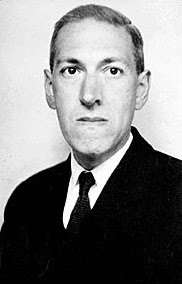
H. P. Lovecraft is a cult author of “weird fiction” from the 1920-30s. Although I had heard of the name, I didn’t become interested in Lovecraft until Matthew Sweet's interview of novelist China Mieville and journalist Suzi Feay on BBC's Nightwaves (Oct. 20, 2010).

For the last three months, I’ve been feasting on Lovecraft’s short stories. His grotesque apocalyptic visions help us understand modern American anxieties in the light of Gothic fiction and the inheritance of Edgar Alan Poe. What I also find most enlightening is the persistence of archaeology in the form of both archaeological knowledge but also the inclusion of archaeologists as characters. “At the Mountains of Madness” (1931), Lovecraft’s longest story, we read about a fantastical campaign, the Miskatonic University Expedition to Antarctica. Partially written in the form of expedition reports, the explorers discover an unknown species, as well as the civilization of the “Old Ones” that flourished before the Pleistocene geological age.

Lovecraft’s own archaeological scholarship creeps dominantly through the narrative (Eckhardt 1987) and includes reference to late antiquity and its use of spolia. Lovecraft compares the sculptural reliefs of the Old Ones with the decadence of Constantinian art, which he partially acquired from general 1920s art-historical notions but more specifically from Oswald Spengler’s, The Decline of the West translated into English in 1926 and 1928. Along with Joseph Wood Krutch’s, The Modern Temper (1929), Spengler influenced Lovecraft’s transition from classicism to Decadence to a sort of antiquarian regionalism and finally to the science of weird fiction (Joshi 2001, 297-305). The decadence of Byzantine art that Lovecraft cites takes on a positive role in reconstructing the civilization of the Old Ones.

“Art and decoration were pursued, though of course with a certain decadence. The Old Ones seemed to realize this falling off themselves; and in many cases anticipated the policy of Constantine the Great by transplanting especially fine blocks of ancient carving from their land city, just as the emperor, in a similar age of decline, stripped Greece and Asia of their finest art to give his new Byzantine capital greater splendours than its own people could create. That the transfer of sculptured blocks had not been more extensive, was doubtless owing to the fact that the land city was not at first wholly abandoned. By the time total abandonment did occur – and it surely must have occurred before the polar Pleistocene was far advanced – the Old Ones had perhaps become satisfied with their decadent art – or had ceased to recognize the superior merit of the older carvings. At any rate, the aeon-silent ruins around us had certainly undergone no wholesale sculptural denundation; though all the best separate statues, like other moveables, had been taken away” (Lovecraft 2005, 555)

Lovecraft has witnessed a revived interest in 2010. News had it that Guilermo del Toro was directing a film version of "Mountains of Madness," produced by James Cameron and starring Tom Cruise. As of early March, unfortunately, Warner Bros. has pulled the plug on this $150 million project. See here and here.

“The Rats in the Walls” (1924) is another Lovecraft stories that involves an archaeological expedition, but I will discuss it in a future posting. I must also warn the reader that during my Spring Break, I’ve been thinking about a strand of New Wave rock from the 1980s that marries the dark vision of the Gothic tradition with a post-punk musical precision. I’ve been thinking about the archaeological layers of The Cure, for example, and trying to weave a thread of archaeological Orientalism that ties Bob Dylan’s “Isis,” David Bowie’s “Aladdin Sane,” The Cure’s “Fire in Cairo,” and Peter Murphy’s (of Bauhaus) Muslim conversion and migration to Turkey.

LOVECRAFT CITATIONS:

- Eckhardt, Jason C. 1987. “Behind the Mountains of Madness: Lovecraft and the Antarctic in 1930,” Lovecraft Studies 6 (Spring), pp. 31-38.
- Joshi, S. T. 2001. A Dreamer and a Visionary: H. P. Lovecraft in His Time, Liverpool.
- Lovecraft, H. P. 2005. Tales, ed. Peter Straub (The Library of America 155), New York.

Sunday, January 09, 2011

Greek Landscape and Literature 1880s-1930s

One often plays imaginary worlds. I know that the notion of fantasy and doctorate dissertation usually occupy mutually exclusive realms, but for many of us for whom the dissertation has receded into the chambers of the distant past, the process of a PhD can be sufficiently romanticized. Recently, I've been thinking that in an ideal world, I would love to be starting a new PhD, embarking on that exciting decade that is typically the archaeological thesis. Surrounded by a community of idealistic novices but still attached to the womb of wise advisors, graduate school is pretty damn great. With the new year, I asked myself, "what would be an ideal world dissertation topic," and this one topic keeps coming up as my top choice: Landscape Archaeology and Literary Landscapes of Greece: 1880-1940. In this imaginary new dissertation, I would basically read all major Greek poetry, novels, and short stories from the 1880s to the 1930s and analyze the representation of the Greek landscape in all its particularities and idealizations. I would then take that information and compare it with the real landscape to the extent that surface survey and social history allows us to reconstruct it. In so many ways, it would be an attempt to write Raymond Williams' The Country and the City (1973) from the Modern Greek perspective. Williams' study, which essentially spearheaded a whole tradition of peasant studies and Marxist literary criticism, is a book that I keep returning to over and over again.

One of the reasons that makes this dissertation a fantasy is the fact that I am not trained in literary criticism, but I know a bit more about landscape archaeology. My ideal committee for such a dissertation would match a literary and an archaeological mentor. Once again, in an ideal world the literary supervisor would be Artemis Leontis, Gregory Jusdanis, Roderick Beaton, or Dimitris Tziovas, while the field survey supervisor would be Timothy Gregory, Michael Given, Jack Davis, Cyprian Broodbank, Jim Wright, or Bill Caraher.

In an imaginary thesis proposal, I would stress that between the 1880s and the 1930s Generations of Greek writers, incredible attention is placed on the Greek landscape, contemporary institutions and folklore. Some preliminary work by literary historians have already been laid. In 1992, Journal of Modern Greek Studies devoted an entire issue on the relationship between place and time in Modern Greek literature. What many scholars have noted that Greek nationalism of "The Great Idea" necessitated the conflation of historical time with geographical space. Archaeological monuments, sites and landscapes were central to this project as spatial entities with intense chronological auras. The time/space conflation is nothing more than the German late-18th-century tradition of German Romanticism and a concept of emotive history articulated by Herder, Goethe and others. The romantic conception of the Greek landscape was both imaginary but also grounded on lived experiences. Greek writers used the landscape as a laboratory. In just half a century, they constructed a landscape that has become so pervasive in the mindset of modern Greece, that people have assumed it as natural, rather than an ideo-cultural construct.

You might have guessed that one of the reasons I'm reading Vizyenos is to identify the beginnings of this imaginary new dissertation. As far as I can tell, the project must begin with the 1880s Generation, with Realism, and particularly with Papadiamantis, Vizyenos, and Palamas. I have sporadically read these authors, especially to reconstruct the imaginaire of the contemporary archaeologists like Anastasios Orlandos (see DO paper). But I have never systematically read them with an eye for the landscape. One question at stake would be the degree to which various authors dwell in the real landscape or in a subjective landscape. Christopher Robinson has noted a dialectic between real and subjective in Modern Greek poetry. Realism takes over in the 1880s but it is foiled by modernists who shift attention to subjective interiors, such as Cavafy and Karyotakes. The Karyotakes tradition was criticized as anti-national, for taking the reader out of the landscape and shutting him inside his Athenian bedroom. Robinson observes that the Generation of the 1930s continues the landscape stylization of the 1880s with a dose of subjectivity from Cavafy and Karyotakes. See, Christopher Robinson, "Greece and the Poetry of Place, 1880-1945,” Journal of Mediterranean Studies 2 (1993), pp. 183-195.

The starting point for an analysis of place would have to be Peter Mackridge's essay in the same volume, "The Textualiation of Place in Greek Fiction, 1883-1903,” Journal of Mediterranean Studies 2 (1993), pp. 148-168. It would be supplemented by Michalis Chryssanthopoulos, “Anticipating Modernism: Constructing a Genre, a Past, and a Place,” In Greek Modernism and Beyond: Essays in Honor of Peter Bien, ed. Dimitris Tziovas, (New York, 1997) pp. 61-76. The study of Vizyenos would start from Chryssanthopoulos, Γεώργιος Βιζυηνός. Μεταξύ φαντασίας και μνήμνς (Athens, 1994).

The specificity of place mattered greatly in the 1880s. On the pages of Estia, the literary magazine that pushed the Realist generation, Nikolaos Polites would criticize authors for incorrect topographical references. In other words, the literary author would become a scientific geographer. Panagiotes Moullas gives examples in his 1980 edition of Vizyenos collected short stories (p. λθ'-μ'). The author of "Shadows of the Past" loosely refers to a bay and a cave in the beach of Kalamos. Nikos Polites raises the following criticism in Estia 362, suppl. (Dec. 4, 1883). "The author commits a geographical error ... inexcusable for a Greek writer who has the responsibility of knowing his country well." In another instance, the author of "Chrysoula" refers to a village by the name Kastania. Polites writes, "the author is careless. Although many villages have the name Kastania, none of them is on the sea... at least as far as I know."

In addition to a birth of topographically-specific literature, the 1880s saw the beginnings of scientific topography. Historians would leave the comfort of their libraries and search the Greek countryside for toponyms and monumental specificity. Societies of "nature-lovers" (φυσιολάτρες) and hikers (ορειβάτες) were formed in urban centers. The Greek middle-class infiltrated the folkloric countryside for entertainment and poetic inspiration. Foundational studies of historical geography coincided with the rise of poetic geography. Stephanos Dragoumes, Χρονικό του Μορέως. Τοπονυμικά – τοπογραφικά – ιστορικά (Athens, 1921) , a topographical analysis on the medieval Chronicle of the Morea, is a good example. While starting my real dissertation back in 1998, I was lucky enough to be Gennadios Library fellow and browse through the collections. The Gennadios has an incredible collection of a genre of Greek tavelogues from the late 19th century that have not been studied very well. Most traveler literature has focused on foreign travelers instead of Greek travelers in Greece. The latter had an obvious cultural and linguistic advantage that make their publications that much more valuable. Some of my favorites are Chrestos P. Koryllos, Πεζοπορία από Πατρών εις Τρίπολιν επάνοδος εις Πάτρας διά Ναυπλίου και Κορίνθου (Patras, 1890) and the following year a work written with his brother Theochares Koryllos, Πεζοπορία από Πατρών εις Καλαμάς (Athens, 1891). When I first encountered these texts, I was tapping them for particular information about the topography of the Northwestern Peloponnese. I haven't revisited them since and I would love to study them as a genre. The tradition of amateur topographical history begins with the romantic 1880s but continues to this day. Doing fieldwork through the Peloponnese, the Morea Project met dozens of typically retired local historians and collected their self-published pamphlets. I remember that my own father's greatest ambition was to write a local history of his village as a retirement project.

Before leaving this fantasy of a future dissertation, I want to mention another type of primary text, which I encountered while working with Nikolas Bakirtzis at Saint John Prodromos Monastery in Serres. Factual description is coupled with romantic stylization in yet another genre that is neither literature nor historical research. When conducting a landscape field survey of Prodromos' hinterland, we studied a wonderful Proskynetarion written by the monastery's abbot Christophoros. The Greek Proskynetarion was published in Leipzig in 1904. It offers a realistic account of the monastery, which begins with a description of its natural setting and extra-mural life, "Χωρογραφία της Ιεράς Μονής." The document is wonderful in its employment of romantic idealism and a flowery language to describe place with scientific specificity. The photograph above is from the beautiful natural setting of Prodromos (by Matthew J. Milliner). We presented the landscape study at the last Modern Greek Greek Association conference in Vancouver, see here. See official project website for description, here. It is with great sadness that I heard from Nikolas that the south wing of the monastery burned down on Dec. 13, see here.

Wednesday, January 05, 2011

Church as Hospice: Vizyenos

Thinking about buried fetuses in the floors of Byzantine houses has lead me to reconsider notions of architecture defined by functionalism, or the tight association between human activities and spatial definition. Specialized functions in domestic architecture, for instance, are the product of the middle class. Rooms did not receive dedicated uses until the late 18th and 19th centuries. Modern architectural education, from the Beaux Arts to the Bauhaus, assumes functional integrity; it's no surprise that modern architectural history is a typological discipline.

To put it another way, pre-bourgeois architecture was multivalent in respect to function. Turning our consideration from the Byzantine house to the Byzantine church, we find gray areas of usage. We may, for instance, ask the question "did the house ever function as a church" or "did the church ever function as a house"? I will not answer these questions now but will simply mention one social practice from the late 19th century that domesticated the space of the church.

The case study comes from a short story by Georgios Vizyenos, "My Mother's Sin" ("Το αμάρτημα της μητρός μου") published in 1883. Vizyenos's short stories are of critical importance as heralding a new realist era in Greek literature. Before Vizyenos, Greek literature was like, all literature of its time, universalist in nature. It was not till the 1880s that a realist ethos emerged (influenced by Zola, etc.) focusing on a real rather than an imaginary Greece. For the first time, Greek writers turned their attention to contemporary (rather than historical) Greece and sought to document the ethos of its rural reality. The genre was called "ethography," a term which Roderick Beaton translates as "folkloric realism."

In "My Mother's Sin," Vizyenos tells the story of a family from his home town, Vize in Thrace. The story begins with a very sick child, Annio, whose disease consumes a family's life and resources. For 19th-century folk society, sickness was natural under two conditions concluding either to death or to health. A prolonged state of sickness was unnatural. The last resort for any such predicament was a supernatural diagnosis. Once all other remedies failed (in producing health or death), the body of the diseased was brought into the church, assuming that the prolonged disease. The supernatural cure required that the sick individual sleep for 40 days in the church, where the battles of good and evil could resolve their conflict. In the church, the typically incapacitated body would be attended by the family, who naturally moved into the building, too. Vizyenos description of this practice is fascinating, taken from the point of view of a younger brother. During the night, the ecclesiastical interior would animate the young boy's fantasies. During the day, with nothing to do in the building, the young boy would take up daily chores like cleaning the floors. On Sunday services, the body would continue to lie in front of the altar and the family would try to position it under the reading of the gospel for maximum effect.

In the story, residence at the church ends prematurely. Since no development occurred in the sick girl's health, the priest urged the family to return to their home before the completion of the 40 days. If the sick person actually lost the battle and died in the church, the holy area would be spoiled. It was to the priest's best interest, therefore, to have the diseased die in their own home. This sounds like some modern hospital trying to maintain its mortality statistics by suggesting hospice care. We also detect some slight irony in Vizyenos treatment of ecclesiastical authority.

Although it dramatizes 19th-century social practices, Vizyenos story sheds some light to older Byzantine customs. Before the ultimate diagnosis of moving into the church, the mother of the sick child takes some intermediary steps of bringing the body to the church via the garments that it touches. She takes garments of the sick girl to church and ties them to the building, a practice testified in Byzantine texts. In the Life of Theophano, for example, Theophano’s father removes a belt that was hanging from a column in the Church of the Theotokos Bassou in Constantinople and ties it around the belly of his wife, Anna, who was having a difficult labor. This gives us license to imagine all kinds of domestic fragments covering the body of the Byzantine church. The male space of churches was typically feminized by fabric rituals that involve dressing and undressing the architecture.

Vizyenos story holds one additional point of interest. The town of Vize contains Byzantine architecture of consequence, most notably the Hagia Sophia. This is clearly not the church of Annio's hospice, since it had been already converted into a mosque. Incidentally, Hagia Sophia has been the subject of recent architectural study by Franz Alto Bauer (Basel) and Holger Klein (Columbia), see here. Unfortunately, the project became too complex for Bauer and Klein to maintain long-term. On a literary note, Vizyenos' short stories exploit two Byzantine narrative modes, antithesis and ekphrasis. For this analysis, see Margaret Alexiou, “Writing against Silence: Antithesis and Ekphrasis in the Prose Fiction of Georgios Vizyenos,” Dumbarton Oaks Papers 47 (1993) pp. 263-286

Vizyenos short story is available in English, see My Mother's Sins and Other Stories by Georgios Vizyenos, trans. William F. Wyatt (Hanover, 1988). For the original Greek version, see Γ. Μ. Βιζυηνός, Νεολληνικά Διηγήματα, ed. P. Mellas (Athens, 1980). I quote the animated and uncanny experiences in the church from the childhood memories of the sick girl's brother.

Ενθυμούμαι ακόμη οποίαν εντύπωσιν έκαμεν επί της παιδικής μου φαντασίας η πρώτη εν τη εκκλησία διανυκτέρευσις. Το αμυδρόν φως των εμπρόσθεν του εικονοστάσιου λύχνων, μόλις εξαρκούν να φωτίζη αυτό και τας προ αυτού βαθμίδας, καθίστα το περί ημάς σκότος έτι υποπτότερον και φοβερώτερον, παρά εάν ήμεθα όλως διόλου τα σκοτεινά. Οσάκις το φλογίδιον μιας κανδύλας έτρεμε, μοι εφαίνετο, πως ο Άγιος επί της απέναντι εικόνος ήρχιζε να ζωντανεύη, και εσάλευε, προσπαθών ν΄αποσπαθή από τας σανίδας, και καταβή επί του εδάφους, με τα φαρδυά και κόκκινα φορέματα, με τον στέφανον περί την κεφαλήν, και μετ τους ατενείς οφθαλμούς επί το ωχρού και απαθούς προσώπου του. Οσάκις πάλιν ο ψυχρός άνεμος εσύριζε δια των υψηλών παραθύρων, σείων θορυβωδώς τας μικράς αυτών υέλους, ενόμιζον, ότι οι περί την εκκλησίαν νεκροί ανερριχώντο τους τοίχους και προσεπαθούν να εισδύωσοιν εις αυτήν. Και τρέμων εκ φρίκης, έβλεπον ενίοτε αντικρύ μου ένα σκελετόν, όστις ήπλωνε να θερμάνει τας ασάρκους του χείρας επί του "μαγκαλίου", το οποίον έκαιε προ ημών. Και όμως δεν ετόλμων να δηλώσω ουδέ παραμικρότεραν ανησυχίαν. Διότι ηγάπων την αδελφήν μου, και εθεώρουν μεγάλην προτίμησιν να είμαι διαρκώς πλησίον της και πλησίον της μητρός μου, ήτις χωρίς άλλο θα με απέστελλεν εις τον οίκον, ευθύς ως ήθελεν υποπτευθεί ότι φοβούμαι.

Vizyenos, Νεοελληνικά διηγήματα, ed. P. Mellas (Athens, 1980), pp. 8-9.

Saturday, November 13, 2010

Demuth & Williams No. 5

Among the rain
and lights
I saw the figure 5
in gold
on a red
firetruck
moving
tense
unheeded
to gong clangs
siren howls
and wheels rumbling
through the dark city.

Charles Demuth, The Figure 5 in Gold (1928), Museum of Modern Art, New York
William Carlos Williams, "The Great Figure," Sour Grapes (1921)

Thursday, April 29, 2010

The strangeness that attends even the most mundane circumstances

I have embraced Chris Arthur’s mission statement, “the strangeness that attends even the most mundane circumstances," in his essay "(En)trance," The Literary Review, reprinted in The Best American Essays 2009, ed. Mary Oliver, (Boston and New York, 2009), pp. 2-16. Arthur develops both a unique craft of essay writing, but also a style of architectural writing. Here is how he describes this process.

“‘Only connect,’ said the great E. M. Forster. ‘Only write about what you know,’ says the old watchword of practical advice for would-be writers. I attempt to disconnect things from the dense mesh of their immediate camouflaging milieu and examine them with a gaze whose first allegiance, far from being given to the warm familiarity of the known, is rooted in a recognition of the strangeness that attends even the most mundane circumstances. While Foster and writers of their exalted ilk concentrate on the construction of fictions, weaving their delicate spun cacoons of imagined happenings and outcomes on the hard substratum of facts—about India, about manners, about sexuality—I focus on fragments of the substratum itself, trying to tease out the tendrils that are coiled tightly at the heart of every moment, their intricate abundance independent of invention.” (p. 2)

Last year, when I taught a seminar on domestic architecture, I began collecting house-narratives from students. I posted some of the best “House Stories” on this blog. At the same time, I started collecting published writings about houses, selecting pieces that clearly articulate the interface between the objective and subjective architectural experience. I think of this as a bulk-pack-in-the-making or my own Best-House-Essays.

Best American Essays 2009 includes two such house essays, Chris Arthur’s “(En)trance” (from The Literary Review) and Michael Lewis’ “The Mansion: A Subprime Parable” (from Condé Nast Portfolio). Arthur’s essay explores the entranceway of his mother’s house in Shandon, Ireland. Arthur’s philosophy of writing, quoted above, resonates with a hermeneutic tradition of architectural analysis exemplified by the work of David Leatherbarrow (see, Architecture Oriented Otherwise, 2008). Lewis’ essay describes his own real estate adventures with a New Orleans mansion through which he interprets the origins of the sub-mortgage crisis from the depths of the American psyche regarding domesticity and social status.

Here are some tidbits from Arthur’s “(En)trance” that I enjoyed.

1. Technical correctness, “pillar” versus “pilaster,” understanding the technical difference (the former attached the latter freestanding) but abandoning it in favor of common usage among the house occupants

2. The removal of the iron gates in World War II to be melted for armament, more important than practical reason, this signaled the opening up to outside influence and increasing the permeability between of boundaries set by A. family, B. nation, and C. faith.

3. The pillars attached to a curved wall, giant cupped hands placed at the roadside.

4. Laurel grotto behind left pillar, a secret observation post for children spying on the adult world. “It was here we found a discarded whiskey bottle not quite empty, a half-smoked cigarette, its butt inked with lipstick, crumpled pages from a pornographic magazine, once a pair of knickers. Sharp verbal flecks (‘fuck,’ ‘bastard,’ ‘cunt’) blew in from the conversations of strangers walking past, providing spoken parallels to these tawdry artifacts.”

5. The curvy tarmac, opening to the road that lead to the market town of Lisburn or to the airport. The children from the grotto create stories about all the cars that DID NOT turn up the tarmac but continued elsewhere.

6. New occupants inhabit the house now. Shandon is now a well pruned remnant of its previous self. The old “untidy margins” have been circumscribe, defined, made hard by new concrete driveways, patios, lawns and garages.

7. What do the birds think when they fly over the house?

8. Houses with servants offer confrontation with alien peoples. At Shandon, the maids were Catholic and very different from the Presbyterian owners. The candles, the incense, the Latin, realistic depictions of the cross contrasted with the austere simplicities of Presbyterianism. “Anyone who has spent some time in an enclosed space with an excited bat knows what it is to encounter a fundamentally alien form of life,” writes Thomas Nagel (the analytic philosopher).

9. In effect, “Everyone who passed between the pillars might be used to snag a line of narrative and take it forward, pulling the attention of readers along behind them.”

10. Metaphor for fiction/architecture, “For me, invisible dogs stand at Shandon’s pillars, their shared respiration symbolizing the intimate and mysterious connection that exists between the known and the unknown, between the telegraphic attenuations of the names we give things, the descriptions we offer—superficially, partial—and the significance that’s coiled intricately within them.” These are the koma-inu, the stone dogs that guard the gates of shrines in Japan.

11. In Greek mythology, dreams enter through gates. True dreams enter through the Gate of Horn, false dreams enter through the Gate of Ivory. A third gate should be added between dream and walking, the Gate of Laurel.

12. For every “Un” there is an “A”

Thursday, October 22, 2009

The Museum of Innocence

I have this thing with Orhan Pamuk. The great majority of his writings, I'm thoroughly bored with. But every once in a while I'm completely mesmerized by his mastery. Recovering from a full-day of teaching, I browsed through Border's this afternoon and picked up a copy of Pamuk's freshly translated novel, The Museum of Innocence. Thanks to a backlog in New Yorker issues, I only read the September 7th issue last week. Pamuk's "Distant Relations" hence seemed even more current. Let me digress, for a moment, and complain about the New Yorker's recent habit of packaging novel excerpts as "short stories." Enough of that. Sure, they make good advertisement for upcoming novel releases, but they also defy the power of the short story as its own genre. At any rate, one could feel it in the air. The publishing industry was gearing up for a big Pamuk release. Only last week, the New Yorker fiction podcast hosted Orhan Pamuk. He read Vladimir Nabokov's "My Russian Education," published by the magazine in 1948, three years before it was included in Nabokov's memoir Speak Memory (1951). Indeed, Nabokov and Marcel Proust are good precedents for Pamuk.

With a medium cup of Seattle's Best coffee in hand, reclining on a soft brown leather arm chair at a suburban mall in Lancaster, Pa., I found myself getting lost in 1975 Istanbul, and in the bourgeoisie universe of Kemal. The purchase of a gift for his fiancee (a fake designer bag) leads Kemal to an affair with his distant relative Fusun and the disintegration of his life. Already in the first 50-some pages of the novel, Pamuk initiates a wonderful game. The book becomes an exploration of middle-class Istanbul through the objects that Kemal accumulates as testament to his reawakening. Consider the objects Kemal collects after making love to Fusun. "Having become an anthropologist of my own experience, I have no wish to disparage those obsessive souls who bring back crockery, artifacts, and utensils from distant lands and put them on display for us, the better to understand the lives of others and our own." He picks up a floral batiste handkerchief to illustrate the solicitude of Fusun's caress. A crystal inkwell and pen that Fusun toyed with becomes a relic of refinement and fragile tenderness between lovers. An oversize belt buckle illustrates Kemal's masculine arrogance. And this accumulation will build up into The Museum of Innocence.

I am stuck. I have fallen for Pamuk's tricks. Last time this happened, it was with his Black Book (1990). Galip finds out one day that his wife has disappeared. He spends the entire novel wandering through the streets of Istanbul in search of her. Suspecting that she may have left with her half-brother, the journalist Celal, who is also missing, he moves into his apartment. The novel is interspersed with reprints of Celal's articles that his newspaper, Milliyet, prints during his absence. The rhythm of editorial essay and urban wandering make The Black Book into one of the greatest city novels (certainly the best Istanbul novel). Although I've desperately tried to love Pamuk, he has not always served me well. I hated The New Life, got bored with My Name is Red, and didn't even try Snow. Istanbul: Memories of a City was OK but not great. My friend Jennie Uleman, who started visiting Turkey in 2005, got me turned on to Pamuk again after his brilliant Nobel Prize acceptance speech called "My Father's Suitcase" (2006). My spotty on-off relationship with Pamuk is back on. I'm loving The Museum of Innocence. Its particular focus on the vitality of objects, memories and experiences puts it in the same league as Ulysses and In Search of Lost Time, modernism's archaeological canon.

In writing The Museum of Innocence (Turkish original, 1999) Pamuk engaged with the real Istanbul, bought a three-story house, which he turned into a writing laboratory . Read more about the physical Museum of Innocence, here. The building renovation is complete and the museum has opened its doors. I'm dying of curiosity to both finish the novel and visit the "real" museum.

Blog Archive

Kostis Kourelis

Philadelphia, PA, United States